14 to 17 September 2026

AmsterdamCopenhagenStockholmBerlin

80 people.80 prototypes.

London, Thursday 8 October, 18:00 to 21:00. Sixteen seats, in English, by application.

Apply

What you practise

Four skills, in the order you use them

Not modules you watch. Each one is a thing you do that evening, with the clock running and twenty other people doing it beside you.

01

Design a test that finds the signal

On the certificate

Designed the test before the build. Decided what the prototype had to prove, then built only that.

Everyone can build anything now. Almost nobody stops to ask whether it is worth building.

Vibe coding made building cheap, so everyone wants to build more. Here you start at the other end: the cheapest test that tells you whether anyone wants it. A price on a screen, a button that counts taps, five euros in your hand. Then build only that.

A three hour community challenge on taking a real user problem and turning it into a testable product.Akshat Malik, Copenhagen
You leave

Able to turn any idea into a test that costs an evening instead of a quarter of the roadmap.
02

Build it with AI, no code

On the certificate

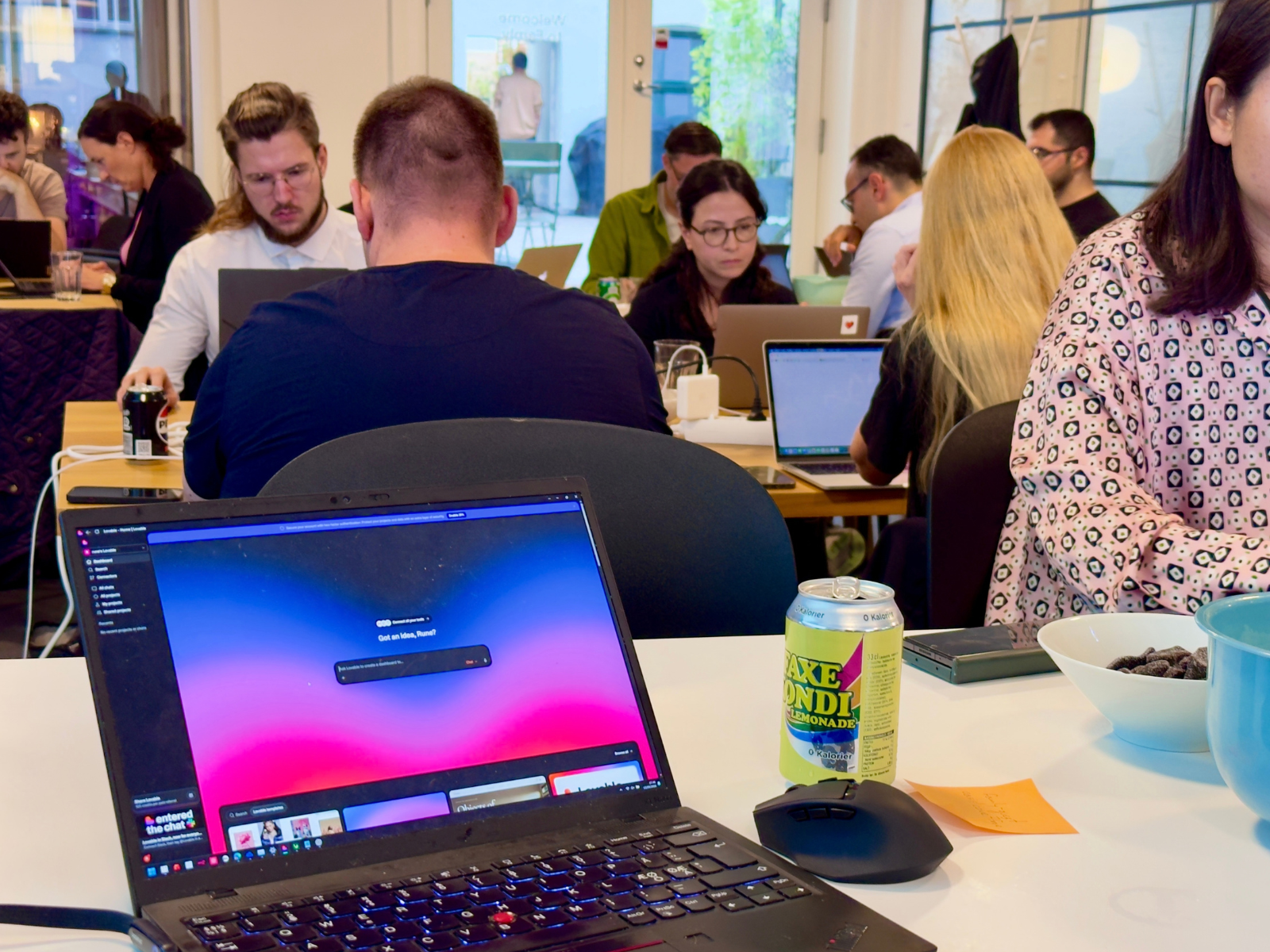
Built it with AI, no code. Wrote prompts instead of code, then had a working app at a live URL.

Photo: two laptops, one prototype

The limit stops being your skill and becomes your imagination.

Nobody stopped at a landing page. Copenhagen built a Spanish tutor that scores the sentence you say out loud. Stockholm built one that reads your fridge from a photo and picks a dinner within your calories. Berlin built a subscription that finds the cheapest delivery app for your order. Three hours each, mostly by people who do not code.

ABWe researched, vibe coded, tested, and pitched our app: a seamless solution helping travelers find the eSIM that best fits their travel needs.Aviv Buchenbacher, Amsterdam
You leave

With a URL that opens on a phone, not a screenshot in a deck.

03

Test it with synthetic users

On the certificate

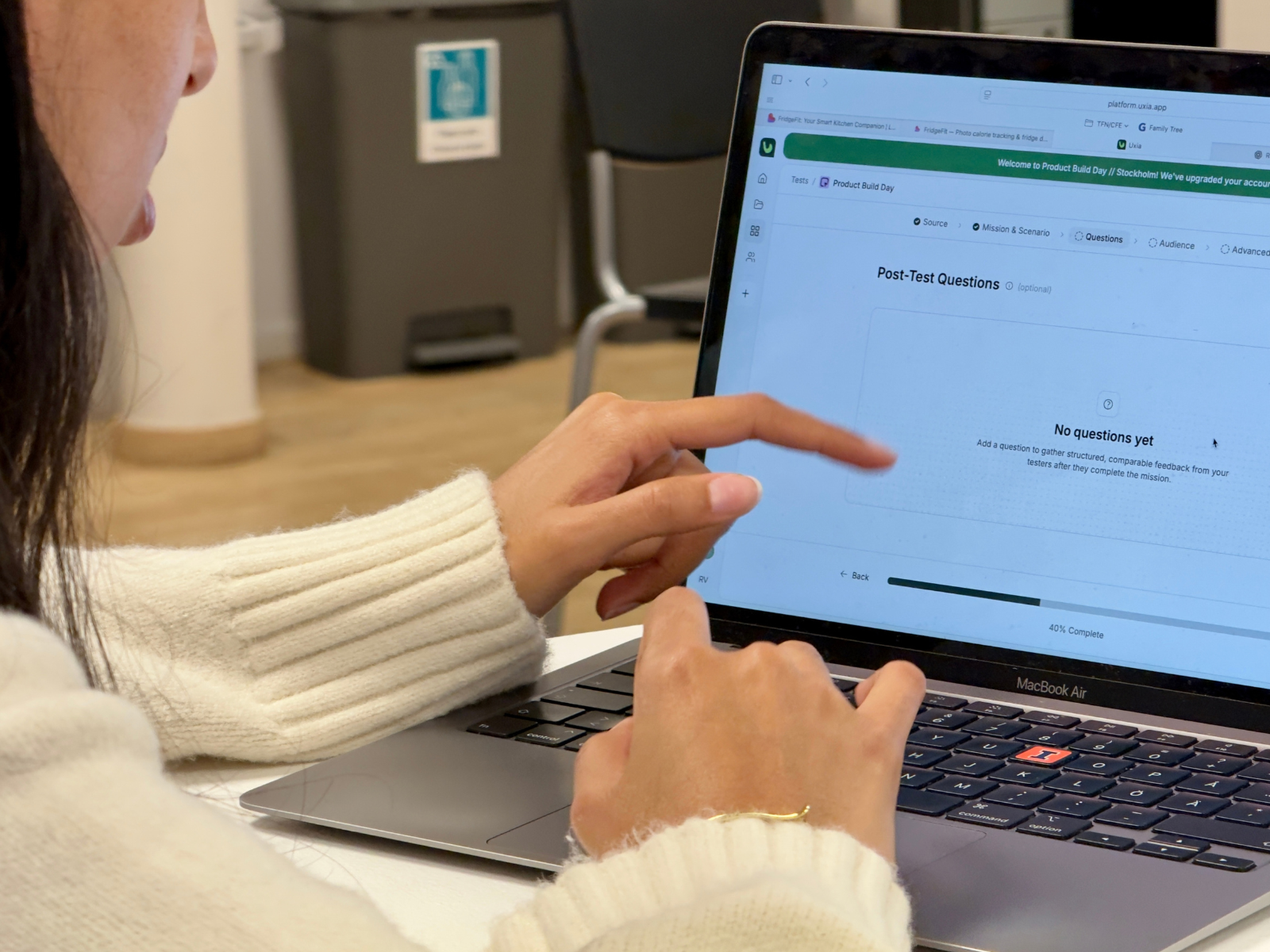
Tested it with synthetic users. Ran an AI user panel on the live build, then fixed what broke.

Photo: reading the findings

Real users are expensive. Do not spend them on problems you could have found yourself.

Recruiting, paying and scheduling real users is the slowest part of product work. An AI panel runs on your live build and finds the obvious faults first: the sign-up three scrolls down, the price nobody understood. Fix those, and your real users get the questions only they can answer.

Planning with the team, building in Lovable, testing with Uxia and presenting to a room filled with people from product, sales, UX and tech, within a couple of hours.Abdul Samad Irfan, Stockholm
You leave

Able to raise the usability of a prototype before it costs you a single real user's hour.

04

Pitch it in three minutes

On the certificate

Pitched it in three minutes. Made the case to judges and the room, then answered for it live.

Your idea is worth what you can sell in three minutes.

Laptop on the screen, no slides, a timer that cuts you off mid-sentence, then questions from a room that built the same thing. It is the same three minutes you get with your CEO or an investor. Here you do it in public and find out which half of your explanation nobody needed.

In just a few hours, we turned a real product challenge into something we could present.Urja Ramanandi, Berlin
You leave

Able to sell an idea to whoever signs it off, in the time you will actually get.

Did it work

The evidence, not the promise

Every team

ran the test on its own live build and walked out with something to fix, not a guess about it.

4 teams

shipped the fix before they pitched, with minutes left on the clock. That is how fast the loop is now.

80

prototypes built across four evenings. The ones their builders chose to publish are still online.

Who you learn next to

More than half the room is senior or above

The median person has been working about ten years. Half the room works in product, and almost nobody is there to write code for a living, which is the point of learning to build without it.

Product50%
Engineering and data19%
Founders and independents10%
Business and operations10%
Students3%
Everything else9%

55%

are senior, lead, head, director or founder

55%

10 yrs

median experience

0-23-56-1011-1516+

Share of the eighty people across the four cities, rounded.

The evening

Three hours, and it never slows down

Intense, creative and loud by the end. You are building inside the first forty minutes and you do not stop until the pitches.

0:00

Welcome and the context

15 minutes

Problem framing

0:15

Set up the tools

15 minutes

AI tooling

0:30

The challenge and the test

10 minutes

Test designScoping

0:40

Build alone

20 minutes, your own idea, no discussion

PromptingPrototyping

1:00

Team up, merge, keep building

75 minutes, the loudest stretch of the evening

TeamworkTrade-offs

1:55

Run the synthetic user test

in the background, while you keep building

Synthetic user testingFindings to fixes

2:20

Pitches, three minutes each, no slides

30 minutes

Public speakingLive questions

2:50

Vote, and applause for everyone who took part

10 minutes

Judging

Participants were using tools

Lovable

The build tool. Everyone gets the paid tier for the evening and keeps the credits for a month afterwards, so the practice does not stop at nine o'clock.

Uxia

Synthetic user testing. A full account for the evening, with more options than the public tier, so the panel you run is a real one.

The credential

Certificate for every participant.

The vibe

How it looked

Next

London, Thursday 8 October

Sixteen seats, 18:00 to 21:00, in English, and every application read by a person. You leave with a working prototype, a test you ran yourself, and the credential.

Apply for London